
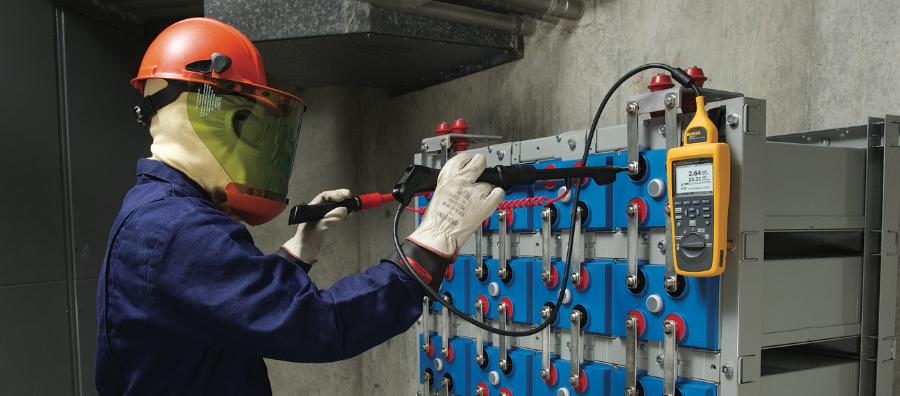
So, you need to check the state of health of your batteries. You’ve had a search online and now you’ve got more questions than answers!
- What’s a discharge test?
- What’s the difference between Impedance and Conductance tests?
- Does the battery type make a difference?
- Can I monitor them 24/7?
In this article, we’ll discuss all of the above to help you cut through the jargon! But first, we need to explore a few things that you really need to think about… battery environment!
The key environmental factors for battery degradation are extreme temperatures (both high and low), which accelerate chemical reactions or reduce ion mobility. Humidity, which can cause corrosion and damage connections is also a factor. Additionally, external conditions like dust, physical vibrations, and shocks can interfere with a battery's components and cooling mechanisms, accelerating wear and tear.
Temperature:
High Temperatures: This accelerates harmful chemical reactions within the battery, leading to faster decomposition of electrodes and electrolytes and overall degradation.
Low Temperatures: This hinders the movement of ions, which reduces the battery's ability to charge and discharge efficiently and can lead to increased resistance and performance issues.
Humidity:
High humidity can lead to corrosion of battery components and interfere with connections, affecting the battery's health.
Dust and Particulate Matter:
In industrial settings, dust can interfere with battery connections and cooling systems, creating problems with performance and longevity.
Vibrations and Shocks:
Physical stresses from strong vibrations or shocks can damage battery components, leading to malfunction and accelerated degradation.
Now we can briefly explore the four question I posed at the start of the article to help give you a better understanding of the types of tests you can carry out.
What is a discharge test?
A battery discharge test, also known as load testing, is a procedure that measures a battery's actual capacity by applying a constant current load until its voltage matches a pre-defined end-of-discharge (EOD) voltage. This test determines how much energy a battery can deliver, assesses its health and reliability, and establishes trends for estimating remaining life. It's a critical maintenance step for critical systems, providing clear evidence of a battery's condition and identifying failing cells.
What is the difference between Impedance and Conductance testing?
An impedance test measures a component's total opposition to AC current, including resistance and reactance, while a conductance test measures how easily a component allows current to flow, essentially being the reciprocal of the resistive component of impedance. Impedance is a more complex measurement involving both resistive and reactive components and is frequency-dependent, whereas conductance is a simpler, scalar measurement of a component's ability to conduct current.
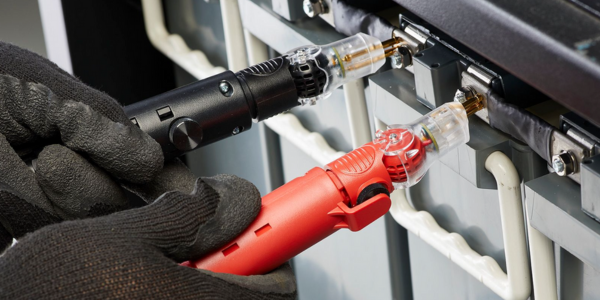
Does the batter type make a difference?
Yes, the battery type makes a difference, and you must use a tester compatible with the specific battery type (e.g., alkaline, lithium-ion, or lead-acid variants like AGM/Gel) to ensure accurate results. Testers employ different algorithms and methods that are not universally applicable; for example, a basic current tester is less accurate for lithium-ion batteries due to their non-linear discharge, while specialised automotive testers are designed to access distinct lead-acid battery types using specific test algorithms.
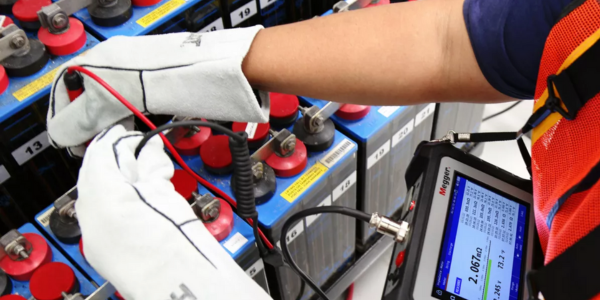
Can I monitor them 24/7?
Yes, you can monitor your battery backup 24/7 using an Uninterruptible Power Supply (UPS) battery monitoring system or service. These systems provide continuous tracking of battery health, performance, and environmental conditions, allowing for early detection of potential issues and proactive maintenance to prevent unexpected power failures. Many modern UPS systems and third-party services offer real-time data, instant diagnostics, and alerts (via email or SMS) for maximum reliability and to extend battery life.

Now that you know the answers to the above 4 questions, you now should know what you need.
But which model is right for you? It’s now time to get in touch with the team a Test Meter to discuss your needs and arrange a site demonstration. You can call our sales team on 0113 248 9966, or get in touch via email via sales@test-meter.co.uk.

About the Author
Andy Street is a Key Account Manager at Test Meter Group with a knack for nurturing strong client partnerships through expert insight and service. A dedicated family man and self-taught foodie, Andy brings the same passion to his kitchen as he does to supporting his customers.