
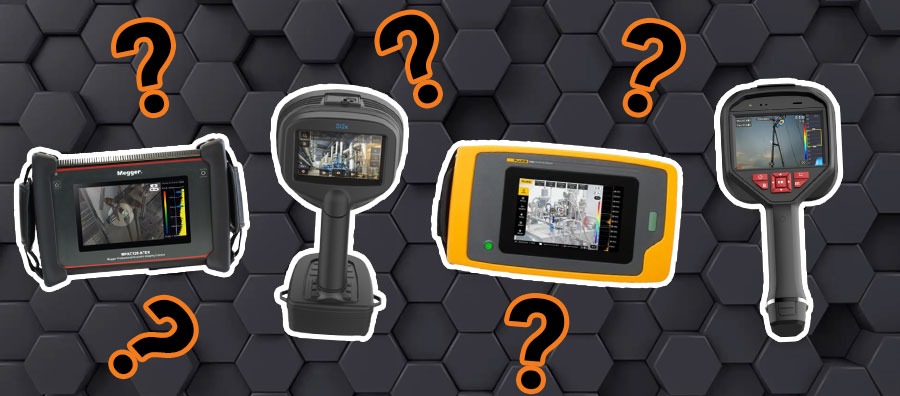
Acoustic imaging cameras are fast becoming fundamental instruments in the manufacturing, utilities, and maintenance industries. These devices literally “see” sound, turning noise into clear images that help technicians quickly identify problems such as a gas leak, a faulty valve, or an electrical discharge.
As more models with unique features and varied levels of performance are released, choosing a model that fits your criteria of requirements can be become a little overwhelming.
In this post, we are going to simplify the process and take you through the most important factors to consider, helping you choose a camera that meets your specific needs and adds real value to your work.
Understand the Purpose and Application
First things first, you need to be clear on what you're going to use the acoustic imaging camera for. Not all cameras are able to handle the same applications, so defining the use case makes sure you end up with the right tool for your needs.
For example, if you're looking for compressed air leaks in a noisy factory, you’ll need a camera that works in the frequency range of 20–30 kHz. Or, if you want to spot partial discharge in electrical systems, then a frequency range of 10–30 kHz is usually enough.
Basically, the right frequency range depends on the type of problem you want to detect. Once your goal is set, it becomes much easier to filter out models that are not suitable for the task at hand.
Microphone Count and Placement
One of the key features that sets acoustic imaging cameras apart from one another is the microphone array. The number and placement of these microphones have a significant influence on how accurately the camera are able to detect and visualise sounds.
Why is this important? Put simply, more microphones mean better accuracy in noisy environments, allowing the camera to separate faint problem sounds from background noise, which is especially important in factories or busy industrial sites.
General recommendations:
- For basic detection that detects small air leaks or signs of early machine failure, look for at least 64 microphones.
- For industrial accuracy and complicated soundscapes, it is better to go for a model that has 200+ microphones.
Another important thing to consider is microphone placement. A well-designed array will provide you with clearer images, higher resolution, and more reliable results, ensuring that no fault goes unnoticed.
Detection Range and Resolution
Another thing to look out for when exploring acoustic imaging cameras is how clearly it can detect sound at range, especially if it is going to be used to inspect large facilities or assets that are challenging to access. Some of the expensive models are able to detect sound sources from at least 200m away, making them perfect for inspecting outdoor substations or large production floors.
High-resolution imaging is equally important; a camera with more than 12 megapixels produces detailed acoustic overlays, allowing you to pinpoint issues quickly and confidently.
In short, the further and clearer a camera can display sound, the faster you can identify and fix problems therefore saving you time and money.
Frequency Range and Sound Handling
The frequency range of an acoustic imaging camera determines what types of problems it can detect. Different faults generate sounds at different frequencies, so it’s important to match your camera to the job.
For example, entry-level and mid-range models sometimes cover frequencies suited for air leaks and electrical discharge, whereas advanced models detect a wider range of issues with more accuracy, reaching frequencies of up to 100 kHz.
If you want flexibility, look for cameras that also feature adjustable frequency filters; these filters let you block out unwanted background noise and focus on the specific frequency of interest. The result? Cleaner images, fewer false positives, and faster troubleshooting.
Visual Overlay and Interface
A good visual overlay makes all the difference when using an acoustic imaging camera. The ability to see sound mapped directly onto a live video feed means you don’t just hear a problem; you can instantly see where it’s coming from.
With high-quality overlays, it becomes easy for you to quickly pinpoint issues, while colour-coded and customisable displays show the intensity of different sounds. For example, brighter or warmer colours draw attention to more serious leaks or discharges, whereas softer colours highlight minor issues.
This makes the tool more intuitive for both beginner and experienced technicians by reducing the possibility of interpretation errors.
Portability, Durability, and Ease of Use
Fieldwork often means carrying equipment into tight, dirty, or harsh environments. That’s why portability and durability can be just as important as technical specs when choosing an acoustic imaging camera.
Look for models that are easy to carry and handle if you are going to be performing long inspections. The models should also be resistant to dust, vibration and extreme temperatures, have a long battery life and have intuitive controls for uninterrupted work and reduced downtime in the field. Just remember, a user-friendly design allows you to spend less time fiddling with settings and more time detecting and solving problems.
Advanced Analytics and Reporting
Modern acoustic imaging cameras don’t just detect sound; they also analyse and quantify it. They come with integrated analytics that are able to gauge the volume of a leak, the amount of energy lost, or the seriousness of a fault. This transforms the device from a simple detection tool into a decision-making system.
Many models also come with cloud connectivity and software that effectively manages data. This allows teams to store results, generate professional reports, and collaborate across sites.
These advanced features add significant return on investment (ROI). Instead of just showing that a problem exists, the camera helps quantify its impact, making it easier to prioritise repairs and justify maintenance budgets.
Conclusion
Choosing the right acoustic imaging camera isn’t just about picking the most advanced or affordable model, it’s about finding the tool that best matches your specific needs.
- ·Start by defining your application: are you targeting compressed air leaks, partial discharges, or a mix of both?
- Then weigh up critical features such as microphone count, detection range, frequency handling, analytics and software capabilities.
- Don’t forget the practical aspects like durability, ease of use, and portability, which can make a huge difference in the field.
By comparing models against these criteria, you’ll be able to invest in a camera that not only detects problems but also saves time, reduces costs, and improves safety in your operations.
For assistance finding the right acoustic imaging camera for your needs, get in touch with our expert team today on 0113 248 9966, or contact us via email at sales@test-meter.co.uk.