
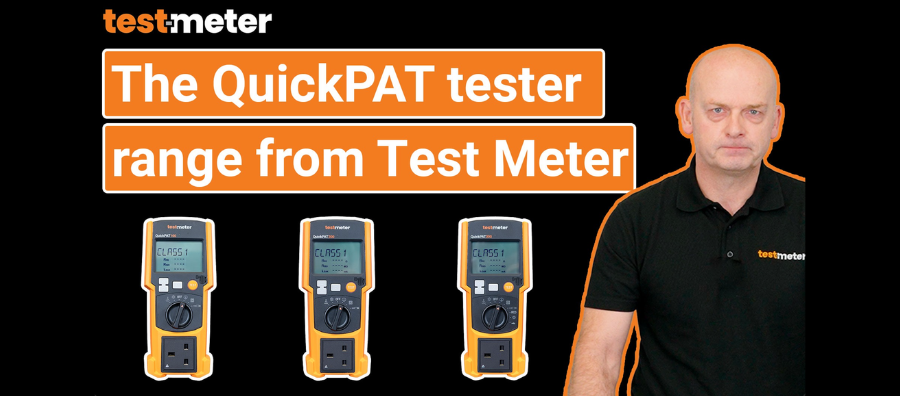
Portable Appliance Testing (PAT testing) remains a cornerstone of electrical safety management across the UK. While the legal framework has not changed, the way PAT testing is carried out has evolved significantly. Duty holders, contractors and in-house teams are now expected to test more equipment, in less time, often with tighter budgets and mixed operator experience.
As a result, there is growing demand for PAT testers that are professional, easy to use and competitively priced. The QuickPAT 100, QuickPAT 200 and QuickPAT 300 have been developed specifically to meet this need, offering a scalable range that supports modern PAT testing without unnecessary complexity.
What Is PAT Testing in the UK?
PAT testing is the inspection and electrical testing of portable appliances to help ensure they remain safe for continued use. In the UK, it supports compliance with the Electricity at Work Regulations 1989 and guidance provided by the IET Code of Practice for In-Service Inspection and Testing of Electrical Equipment (5th Edition) and more recently, BSEN50699:2020.
PAT testing typically applies to Class I, Class II and Class III appliances, extension leads, adaptors and extension reels. The frequency and depth of testing should be based on risk assessment, considering the environment, equipment type and usage.
Why Simplicity Now Matters in PAT Testing
One of the biggest causes of inefficiency in PAT testing is not the test itself, but how the tester is operated. Complex menus, excessive configuration and unclear displays increase the likelihood of operator error and slow testing down.
The QuickPAT range is designed around a clear, repeatable workflow. A rotary function selector with illuminated symbols allows users to select tests quickly, while the display provides immediate PASS/FAIL feedback. This reduces interpretation, speeds up testing and supports consistent results across users with varying experience levels.
Professional Performance Without Unnecessary Complexity
Ease of use does not mean reduced capability. All QuickPAT models provide professional-grade testing suitable for UK compliance, including:
- Protective conductor resistance testing (>200mA)
- Insulation resistance testing at 250V and 500V DC
- Substitute leakage current testing
- Voltage measurement at mains sockets
Each model complies with EN 50678, EN 50699 and the UK 5th Edition Code of Practice, making the range suitable for both in-service and post-repair testing.
The QUICKPAT Range: Model Comparison
QuickPAT100 - Core PAT Testing Made Simple
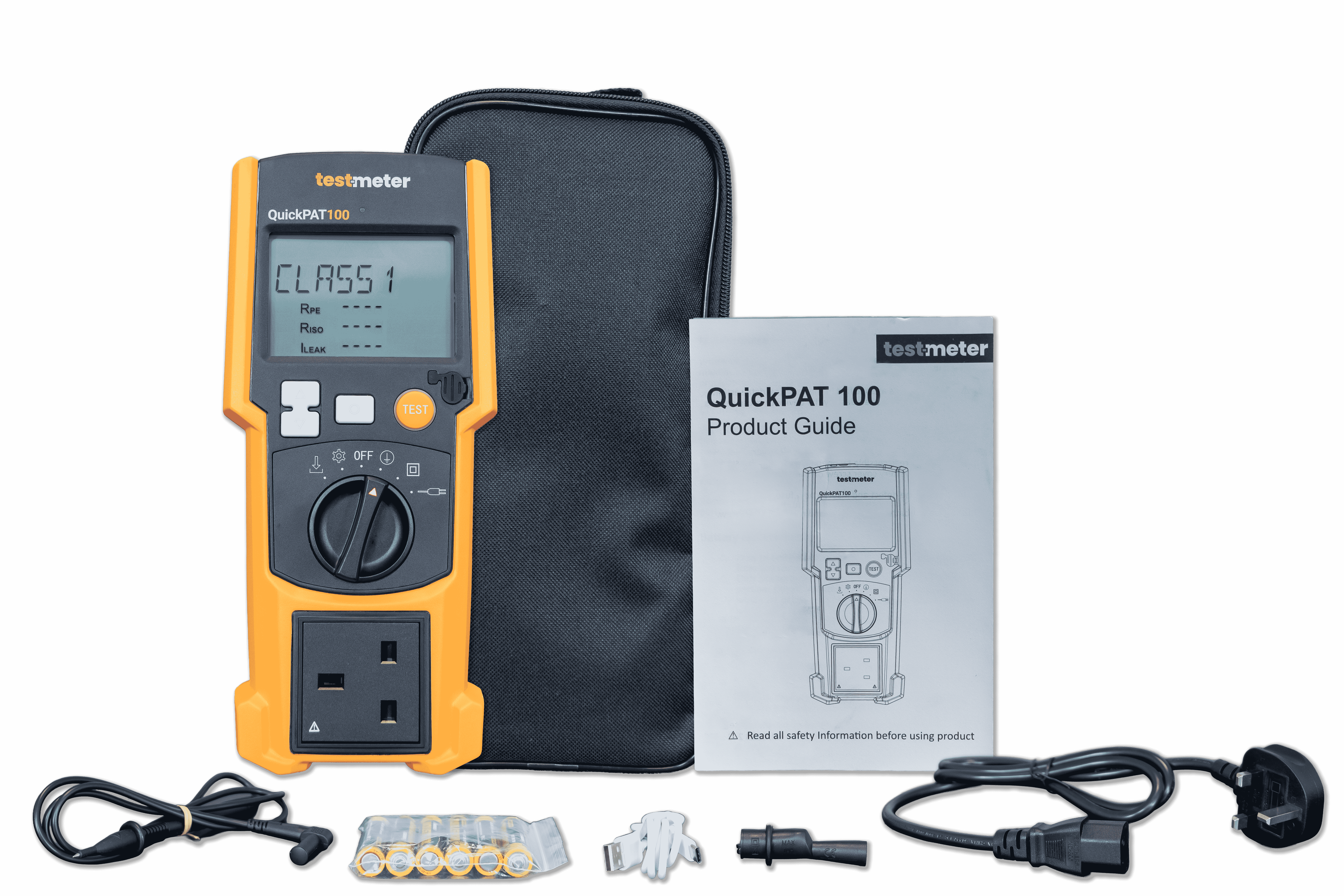
The QuickPAT 100 is designed for users who want fast, unambiguous PAT testing. It features a PASS/FAIL-only display, deliberately removing numerical readings to minimise interpretation. This makes it well suited to environments where speed, consistency and simplicity are priorities, such as schools, offices and basic contractor work.
QuickPAT200 - Enhanced Feedback for Everyday Professionals
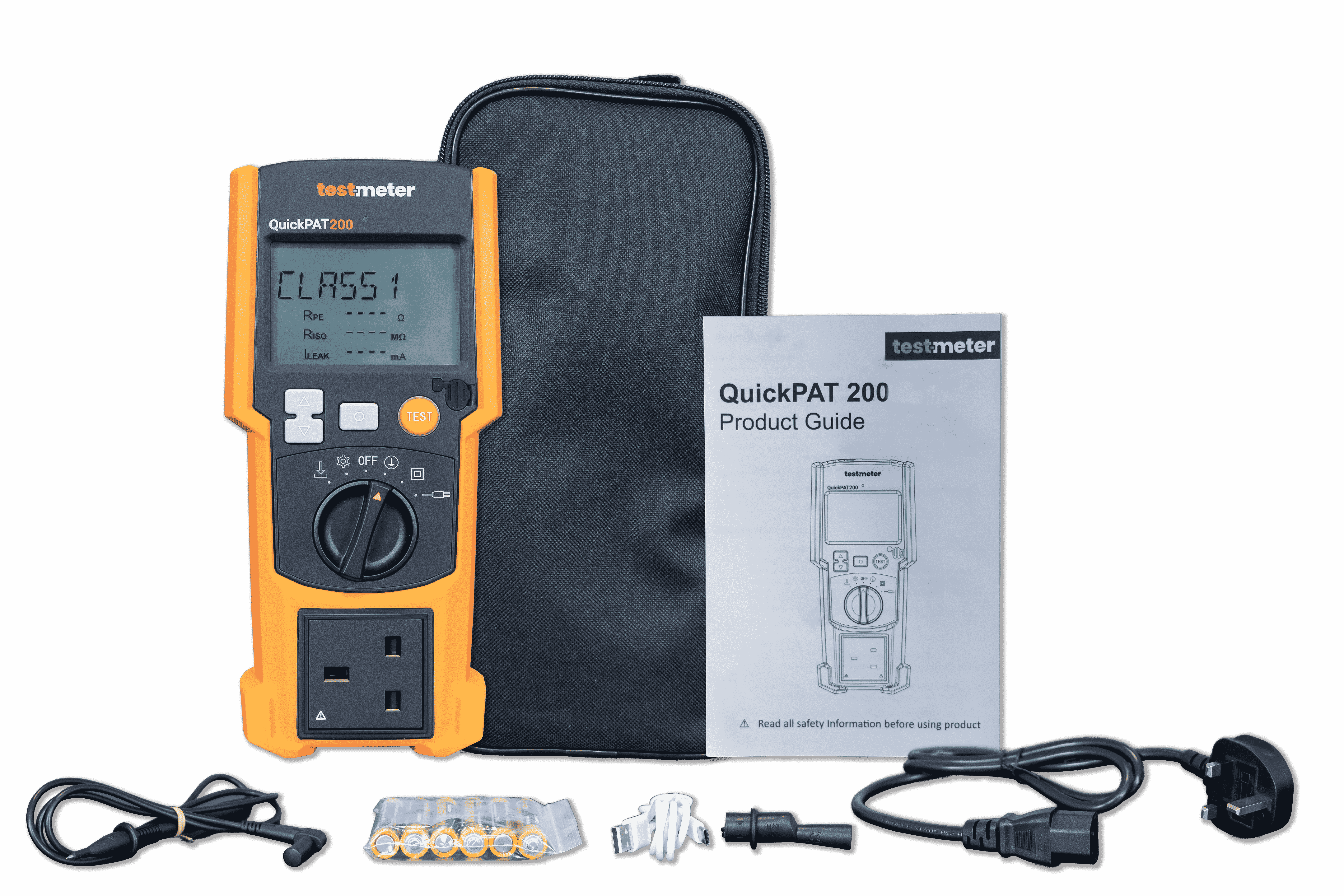
The QuickPAT 200 builds on the same core functionality but adds an expanded display with additional indicators. It retains clear PASS/FAIL outcomes while offering more visual reassurance during testing. This model suits contractors and in-house teams who want slightly more feedback without increasing complexity.
QuickPAT 300 - Advanced PAT Testing for Modern Equipment
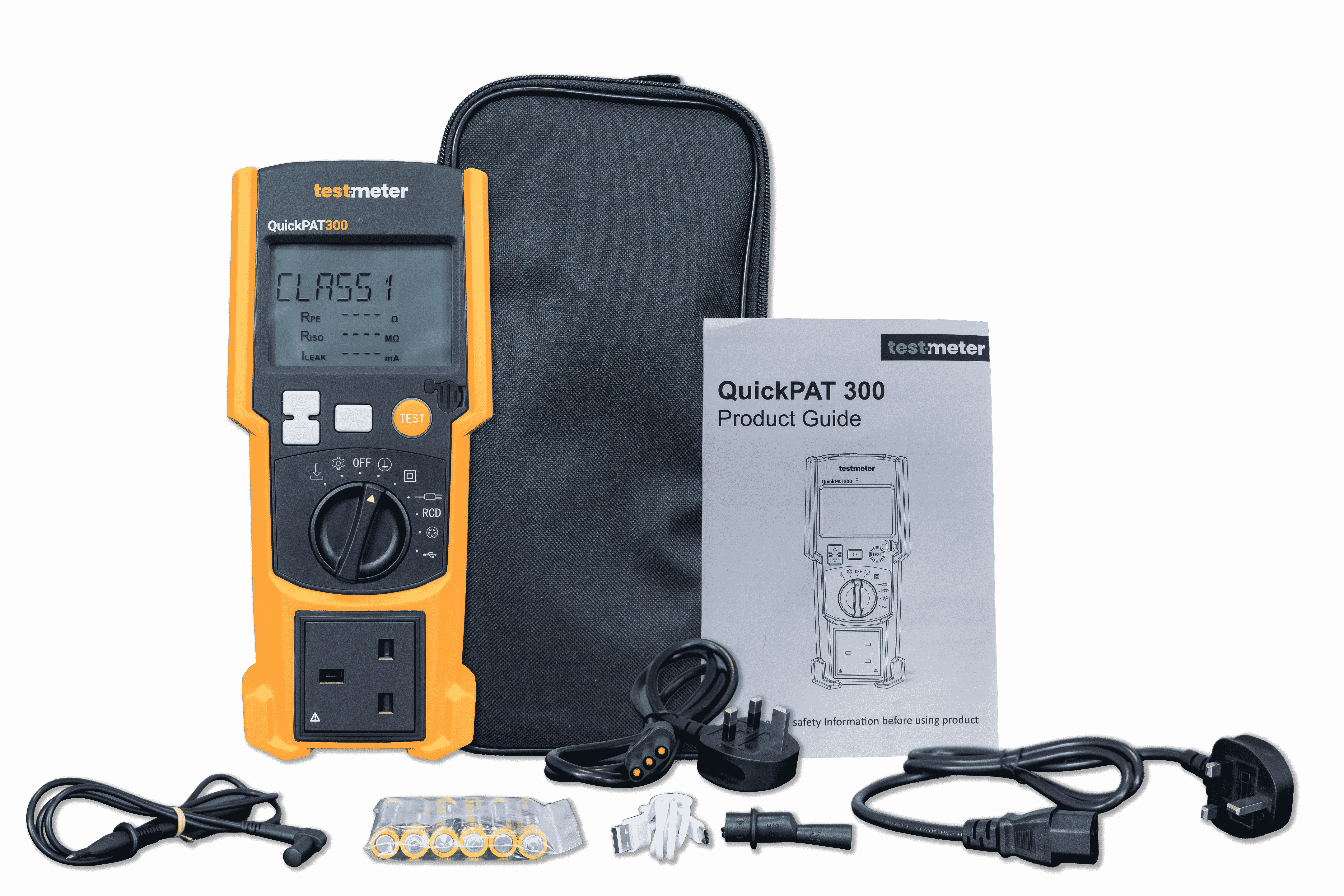
The QuickPAT 300 is the most capable model in the range. In addition to core PAT tests, it supports:
- Differential leakage current testing
- Touch leakage (contact current) testing
- RCD tripping time testing (30mA and 150mA)
- USB device testing
- Optional three-phase leakage testing (with adaptor)
This makes it suitable for IT-heavy environments, workshops, manufacturing sites and repair centres where modern appliances require more advanced testing methods.
Value-Driven Design For Real-World Use
Rather than removing essential test functions to reduce cost, the QuickPAT range achieves value through simplified operation, consistent hardware design and optimised workflows. This allows organisations to deploy professional-grade PAT testers at scale without overinvestment.
All models include 1500-test internal memory, battery and mains power options, automatic power-off and robust enclosures designed for everyday field use.
Frequently Asked Questions About the QuickPAT Range
Which QuickPAT model should I choose?
Choose the QuickPAT 100 for fast, simple PASS/FAIL testing. Choose the QuickPAT 200 if you want additional on-screen feedback. Choose the QuickPAT 300 if you need advanced leakage, RCD or USB testing.
Are the QuickPAT testers compliant with UK PAT testing standards?
Yes. All models comply with EN 50678, EN 50699 and the UK 5th Edition Code of Practice.
Can QuickPAT testers be used by non-electricians?
Yes, provided the user is competent. The simplified workflow and clear PASS/FAIL indication make the range suitable for trained in-house staff as well as contractors.
Do all models support Class I, II and III appliances?
Yes. All QuickPAT models support Class I, Class II and Class III appliance testing, as well as extension leads and cable reels.
Is the QuickPAT 300 suitable for modern IT equipment?
Yes. The QuickPAT 300 includes differential leakage, touch leakage and USB device testing, making it suitable for modern electronic and IT environments.
Conclusion
PAT testing in the UK is increasingly focused on speed, clarity and value. The QuickPAT 100, 200 and 300 reflect this shift by offering a scalable, professional testing platform that supports compliance while remaining easy to use.
By allowing organisations to choose the level of capability they need, without changing workflow or sacrificing accuracy, the QuickPAT range provides a practical solution for modern PAT testing requirements.

About the Author
Jack Forster holds a First Class BA (Hons) degree in Journalism and is Web Content Writer at Test Meter. His experience includes roles with FC Halifax Town and Bradford Bulls, he now channels his skills into combining technical expertise with creative storytelling. Outside of work, Jack enjoys live music events and is a passionate fan of his local football and rugby league sides.