
Electric vehicles are becoming increasingly popular, and with it comes the growing demand for reliable EV charging infrastructure. For electricians, installing a charger is only half the job. They also need to make sure that the chargers are safe to use. This is particularly important for DC fast chargers, which operate at high voltages and require thorough testing before they are commissioned or put back into service.
The challenge is that a charger can appear to work perfectly while hidden faults remain undetected. Issues like poor earth continuity, insulation breakdown, or communication failures may not stop a charger from powering on, but they can affect charging performance, damage equipment, or create serious safety risks for both electricians and EV drivers. Identifying these issues requires more than a basic electrical check.
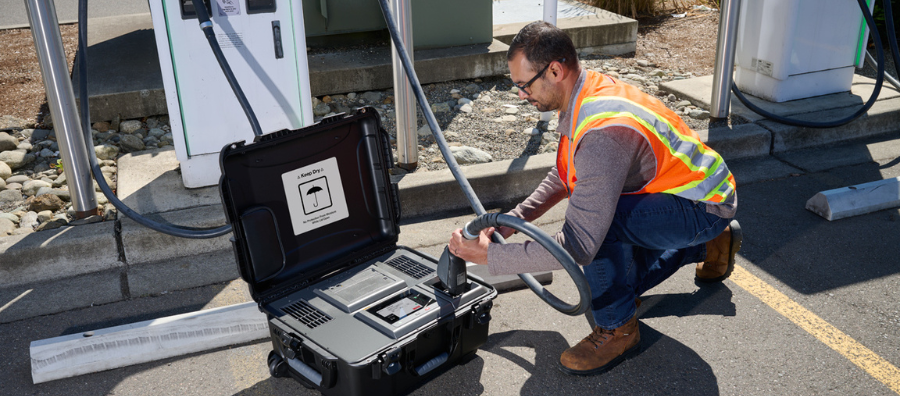
That's why safe EV charger testing goes beyond checking for voltage. The Fluke FEV500 is designed specifically for this task, acting as both an EV simulator and a charging station analyser. It connects directly to CCS DC fast chargers to perform guided safety, communication, and performance tests. If you've ever wondered how to test EV charging stations without relying on an actual electric vehicle, a dedicated analyser like the FEV500 provides the answer.
What is the Fluke FEV500?
The Fluke FEV500 is a dedicated DC fast EV charging station analyser designed for testing CCS fast chargers. Rather than connecting a real EV to verify charger operation, it simulates the charging process while carrying out comprehensive EVSE testing safely, consistently and efficiently.
The analyser plugs directly to the charging station using the CCS connector and guides users through a structured testing sequence that checks key functions including communication, protective earth continuity, insulation resistance, load performance, insulation monitoring and residual voltage. Because testing takes place through the charging connector, electricians can complete most inspections without opening the charger or exposing themselves to live high-voltage components.
The guided testing process also improves consistency. Instead of relying on different testing methods from one technician to another, the Fluke FEV500 follows a standardised workflow with clear pass/fail results. Test data can also be exported to Fluke TruTest™ software, making it easier to organise inspections, generate professional reports and maintain an auditable record of completed work.
By combining EV simulation with guided diagnostic testing in a single portable unit, the Fluke FEV500 streamlines EV charging station testing and gives electricians greater confidence that DC fast chargers are operating safely and as intended.
Testing EV Charging Stations Safely
Knowing how to test EV charging stations involves more than just connecting an analyser and starting a test. You need to prepare the equipment thoroughly so that the charger accurately communicates real results, protects the user from electrical faults and reduces the likelihood of interrupted testing. The Fluke FEV500 simplifies the EVSE testing process by guiding electricians through on-screen prompts through each stage of the inspection.
Step 1: Prepare the Test Equipment
Before starting any EV charging station testing, make sure the charging station is compatible with the Fluke FEV500. The analyser is designed for CCS charger testing, so verifying the connector type is the first step.
Next, check that the analyser is sufficiently charged to at least 20% before testing can begin and create a new project or select an existing one and enter the relevant job information. This helps keep inspection records organised and simplifies reporting later.
Finally, inspect the analyser, test leads and connectors for signs of wear or damage. Although it can be tempting to begin testing immediately, spending a few minutes to check your equipment can prevent inaccurate readings and unnecessary delays.
Step 2: Connect to the Charger and Verify Communication
Once everything is prepared, connect the Fluke FEV500 to the EV charging station using the CCS connector.
The analyser simulates an electric vehicle and establishes communication with the charging station using Signal Level Attenuation Characterisation (SLAC) over the Control Pilot (CP) line. This confirms that the charger can recognise a vehicle and begin a charging session correctly.
Some public charging stations may also require authentication through an RFID card, mobile app or payment system before testing can continue. Completing these prompts ensures the inspection reflects real-world operating conditions.
Successful communication is an important part of safe EV charger testing. If communication cannot be established, there's little point progressing with the remaining tests until the fault has been resolved.
Step 3: Perform Essential Electrical Safety Checks
With communication confirmed, it's time to carry out the electrical tests that verify the charger is safe to operate.
The Fluke FEV500 performs several critical EV charger safety checks, including:
- Protective earth continuity (RLO) to confirm there's a low-resistance path for fault current.
- Insulation resistance testing between the DC conductors and protective earth to identify insulation deterioration or damage.
- Insulation Monitoring Device (IMD) verification (where fitted) to ensure the charger responds correctly if an insulation fault occurs.
Together, these tests form the foundation of a thorough electric vehicle charger inspection, helping identify faults that may not be visible during normal operation but could compromise safety over time.
Practical tip: Before measuring protective earth continuity, zero the test leads to compensate for lead resistance and improve measurement accuracy.
Step 4: Simulate Charging Under Load
Electrical safety is only part of the inspection. Effective DC fast charger testing also confirms that the charger performs correctly while delivering power.
The Fluke FEV500 applies a controlled electrical load to simulate an active charging session, which allows electricians to measure voltage, current and power under realistic operating conditions.
Testing under load helps uncover problems that static voltage checks often miss, such as unstable output, reduced charging performance or faults that only appear while the charger is supplying power.
Safety Tip: To help prevent overheating during extended testing, keep the analyser cover open so its cooling system can ventilate properly.
Step 5: Confirm the Charger Shuts Down Safely
Even after charging stops, stored electrical energy can remain inside the charger for a short period.
As the final step in the inspection, the Fluke FEV500 measures residual voltage to verify that it falls to a safe level within the expected time. This confirms the charging station has been de-energised correctly and can be safely disconnected or serviced.
Completing this final check provides confidence that the charger not only performs correctly during operation but also returns to a safe state once charging has ended.
Safety Best Practices for EV Charging Station Testing
Following good working practices with a dedicated analyser is essential for safe, accurate and reliable EV charging station testing. It important to keep these best practices in mind to obtain accurate results and protection for you and the equipment during every inspection:
>Follow the guided testing sequence. The Fluke FEV500 is designed to perform tests in a logical order. Avoid bypassing or skipping steps and complete each stage to ensure that no critical safety checks are overlooked.
>Test through the CCS connector whenever possible. The analyser simulates an electric vehicle through the charging connector, allowing many inspections to be completed without opening the charger or exposing yourself to high-voltage components.
>Check your equipment before every test. Inspect the analyser, test leads and connectors for signs of wear or damage, and zero the continuity leads before measuring protective earth resistance for the most accurate results.
>Allow the analyser to cool during load testing. Keep the FEV500 cover open so its internal cooling system can operate effectively during extended tests.
>Know how to stop the test safely. If an unexpected fault occurs, communication is lost or the charging station does not respond as expected, use the analyser's stop or manual release functions to end the session safely.
>Never overlook standard electrical safety procedures. Wear the appropriate PPE, follow site-specific safety requirements and secure the work area before beginning any inspection.
Combining the right equipment with safe working practices helps produce consistent results while reducing risks to both technicians and charging equipment.
Final Thoughts
As electric vehicle adoption continues to grow, reliable charging infrastructure has never been more important. Effective EV charging station testing isn't just about confirming that power is available - it's about ensuring every charger is safe, compliant and ready for everyday use.
A thorough inspection should verify communication, protective earth continuity, insulation resistance, charging performance under load and safe shutdown behaviour. Completing these EV charger safety checks helps identify faults before they become safety hazards, reducing downtime, preventing costly repairs and giving customers confidence in their charging infrastructure.
The Fluke FEV500 brings these essential tests together in one guided workflow. Designed for DC fast charger testing and CCS charger testing, it enables electricians to perform comprehensive EVSE testing without relying on an electric vehicle. With clear pass/fail results, streamlined reporting through Fluke TruTest™ software and a repeatable testing process, it makes inspections safer, more efficient and easier to document.