
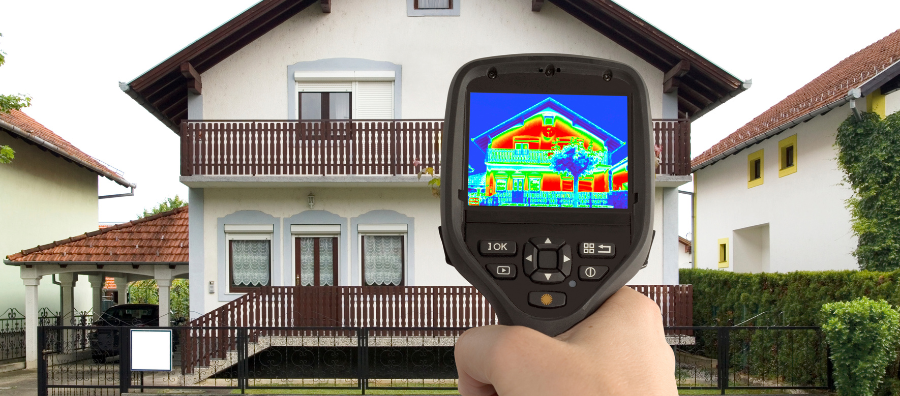
This article explores a new winter initiative in South Hams and West Devon, where councils are loaning thermal imaging cameras to residents across Dartmoor to help identify heat loss in their homes. We will explain how the scheme works in practice, why it can make a real difference to comfort and energy bills, and how thermal imaging can guide simple improvements such as draught proofing and insulation.
This winter, residents in villages on Dartmoor are being given the chance to borrow thermal imaging cameras to help identify where their homes are losing heat.
The BBC recently reported on a scheme supported by councils in South Hams and West Devon, designed to help people reduce heat loss, lower energy bills, and improve comfort during colder months. The scheme also supports wider goals around fuel poverty and carbon reduction, but the benefit for most households is immediate and practical: if you can see where the warmth is disappearing, you might be able to prevent it and reduce your heating bills.
The concept is simple. A thermal imaging camera shows temperature differences as a colour image, making colder areas stand out against warmer ones. That matters because many heat loss issues are invisible to the eye. A room can feel chilly without it being obvious whether the problem is a draught under a door, a cold window frame, or a poorly insulated corner. Thermal imaging gives you a clearer starting point, so you are not making changes at random.
A key part of the scheme is that residents are not left to work it out alone. In Holne village hall, a home energy advisor demonstrated the camera and showed people how to scan common problem areas. This guidance is important because the camera is most useful when you know what you are looking for. Instead of simply noticing that one spot is “blue”, you learn to connect that colder patch to a likely cause, and then to a sensible fix.
Doors and windows were a main focus, because they are some of the most common sources of draughts and heat loss in everyday homes. Even small gaps around a frame, worn seals, or a poorly fitted threshold can let cold air in and warm air out. Preventing this helps in two ways: it reduces the amount of heat your heating system has to replace, and it makes rooms feel more comfortable at a lower thermostat setting. In other words, you get warmth that stays where you want it, rather than constantly leaking away.
The advice shared at the demonstration was not about expensive upgrades. It was about straightforward “quick wins” that many households can do without major disruption. Draught proofing came up repeatedly, because it targets those small air leaks that make a big difference to comfort. Practical examples mentioned included letterbox covers and door bottom excluders, which work by blocking direct pathways for cold air to enter. Once fitted these can reduce cold drafts that often make hallways, living rooms, and ground floor rooms feel harder to heat.
The BBC also spoke to local residents who borrowed a camera to use at home. After finding several cold spots, they said the results would help them decide what improvements to make. That is the real value of thermal imaging in a household setting, it helps you prioritise; instead of spending time and money on changes that may not address the main issue, you can focus on the areas the camera highlights first and then check again afterwards to see if your fix has worked.
Schemes like this also show why access matters. Thermal imaging is a useful technology, but it is not something most people own. By loaning cameras out locally, councils and community energy groups are giving residents a practical tool they can use at the point it is most needed, particularly during winter when heat loss is easiest to notice and bills are at the front of people’s minds.
At Test Meter, we support that same approach. As well as supplying thermal imaging equipment, we also hire out thermal imaging cameras, so homeowners, landlords, and maintenance teams can carry out checks without committing to a purchase.
Please do not hesitate to get in touch with our team to discuss how we can help you, and to view our range of hire thermal imaging cameras, click here.

About the Author
Jack Forster holds a First Class BA (Hons) degree in Journalism and is Web Content Writer at Test Meter. His experience includes roles with FC Halifax Town and Bradford Bulls, he now channels his skills into combining technical expertise with creative storytelling. Outside of work, Jack enjoys live music events and is a passionate fan of his local football and rugby league sides.