
Temperature is one of the most influential variables across the entire food and beverage production ecosystem. It directly influences product quality, shelf life, and safety at every stage – from raw material intake to final packaging. Even within well-managed environments, temperature can fluctuate due to equipment limitations, process variability, or external conditions.
When control is inconsistent, the consequences can escalate quickly. Product spoilage becomes more likely, particularly in temperature-sensitive goods. Safety risks may increase if critical thresholds are not maintained. And compliance failures can arise where regulatory standards require strict temperature control and traceability. In many cases, these issues are only identified later as quality defects, customer complaints, or regulatory issues.
The focus is shifting towards proactive monitoring rather than reactive checks. Thermal monitoring technologies, including non-contact thermal imaging, provide real-time visibility into temperature behaviour across the production line. Instead of relying solely on spot measurements, operators can observe patterns, identify anomalies earlier, and make informed decisions before issues develop further.
This post is going to explore where thermal monitoring delivers the most value within your production process. It will highlight the highest‑risk points, explain the common temperature challenges at each stage, and show how thermal monitoring supports better quality control, reduced waste, and improved compliance.
The Hidden Impact of Temperature Variability
In food and beverage production, even small temperature deviations can create disproportionate effects that are difficult to trace without integrated monitoring. A slight temperature variation during processing or storage may not trigger alarms, but over time it can:
> Affect Product Quality: This is often the first area to be affected. Temperature variations can alter texture, viscosity, or microbial stability, depending on the product. These changes are not always noticeable during the production phase. A batch might pass initial checks and later fail shelf‑life testing, or show inconsistencies once distributed to retailers.
> Cause Equipment Stress or Inefficiency: Machines operating outside their optimal temperature range may experience increased wear, reduced efficiency, or unplanned downtime. In some cases, a heat‑stressed motor may not fail instantly, but thermal anomalies often appear hours or days before the first mechanical symptoms.
> Introduce Contamination or Safety Risks:Certain temperature conditions can create environments where microbial growth is probable, particularly in high‑risk product categories. Even short excursions outside safe ranges can create pockets of risk that traditional sensors fail to pick up – especially if airflow, cold‑spot formation, or uneven heating occurs.
Continuous monitoring across the full production line becomes essential. Rather than treating temperature as a series of isolated checks, a more integrated approach allows manufacturers to track trends, compare performance across stages, and respond with greater confidence. While no system can eliminate all risk, improved visibility provides a stronger basis for control and ongoing optimisation.
Why Thermal Monitoring Matters
Thermal monitoring provides a non-contact, real-time method for assessing temperature behaviour across production environments. Instead of relying solely on fixed sensors or manual checks, it allows operators to visualise heat distribution across equipment, products, and processes as they run.
That visibility can make a practical difference. Subtle temperature deviations – often missed by point-based measurements – can be identified earlier, before they develop into larger operational issues. This supports more timely interventions, although results will always depend on how consistently systems are used and maintained.
Reducing waste and unplanned downtime is another potential benefit. By detecting anomalies sooner, teams can investigate and resolve issues before they affect large product volumes or lead to equipment failure. But it is worth noting that thermal monitoring works best as part of a broader maintenance and quality strategy, rather than as a standalone solution.
Compliance and audit readiness can also improve with better temperature oversight. Thermal data provides a visual and recordable reference point that may support internal reviews and external inspections. While it does not replace calibrated instruments or regulatory controls, it can strengthen overall monitoring practices.
One of the key advantages lies in how information is presented. Visual thermal data allows operators to quickly interpret temperature patterns without needing to analyse complex datasets in isolation. Variations become easier to spot, trends can be tracked over time, and decision-making becomes more informed – particularly in fast-paced production settings.
Where Thermal Monitoring Delivers the Most Value
Not all stages of production carry the same level of risk. Below are the key hotspots where thermal monitoring provides measurable impact.
Filling Line: Protecting Product Integrity
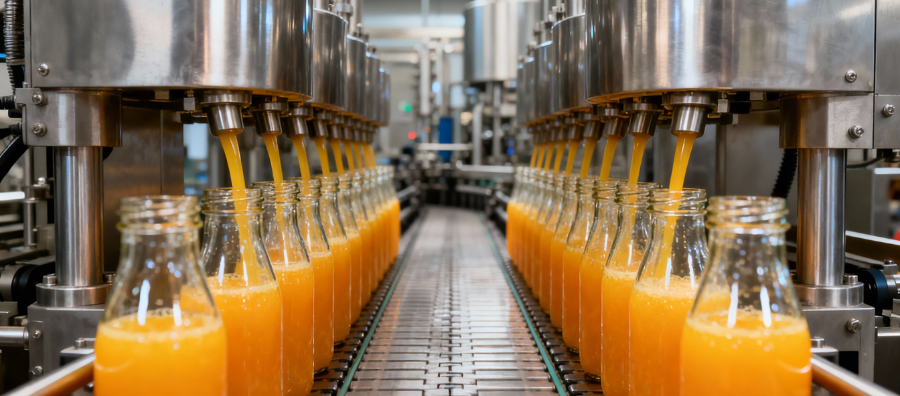
The filling area is one of the most sensitive points in the production line. Temperature variations at this stage can affect everything from product stability to shelf life, particularly in temperature-sensitive formulations.
But incorrect fill temperatures can introduce several risks. Product that is too hot or too cold may not meet quality specifications. Viscosity can change, affecting fill accuracy and consistency. And in some cases, temperature deviations may increase the likelihood of contamination or compromised product safety.
Thermal monitoring helps by providing real-time visibility into temperature conditions during the filling process. Operators can detect deviations earlier and take corrective action before large volumes are affected. This supports more consistent batch production and may reduce the need for rework or product disposal. While not all variability can be eliminated, improved monitoring enables tighter process control.
Staging Areas: Managing Transitions Safely
Staging areas play a critical role in production flow, acting as transition points between processing stages. Products may be held temporarily while awaiting the next step, making these zones particularly sensitive to environmental conditions.
Delays or bottlenecks can increase exposure risk. Temperature fluctuations during staging may affect product quality, especially if goods remain outside controlled conditions for longer than expected. These variations are not always obvious without continuous monitoring.
How thermal imaging helps is that it allows teams to assess holding conditions in real time. Unsafe temperature zones can be identified, and corrective actions can be taken to prevent spoilage. It also supports better coordination between stages by highlighting where delays may be impacting temperature stability.
Packaging Stations: Ensuring Seal Quality
Temperature plays a key role in packaging processes, particularly where heat sealing is involved. Consistent heat application is necessary to ensure that packaging is properly sealed and capable of protecting the product throughout its lifecycle.
Inconsistencies in sealing temperature can lead to weak or failed seals. This increases the risk of contamination, reduces product shelf life, and may result in returns or recalls. These issues are not always visible during production and may only become apparent later in distribution.
Thermal monitoring helps by providing insight into heat distribution across sealing equipment. Operators are able to identify uneven temperatures or deviations that may affect seal integrity. This helps improve packaging reliability and supports more consistent quality outcomes. While it does not replace physical seal testing, it adds an additional layer of process verification.
Refrigeration and Cold Storage: Maintaining Compliance
Refrigeration and cold storage are critical for maintaining product safety and meeting regulatory requirements. Temperature control in these environments must be consistent and well-documented to ensure compliance.
Temperature excursions present a significant risk. Even short-term deviations can affect product quality or lead to non-compliance, depending on the product and applicable standards. Equipment faults, airflow issues, or loading practices can all contribute to uneven cooling.
Thermal monitoring allows continuous verification of temperature conditions across storage areas. It can help identify hotspots, airflow inconsistencies, or early signs of equipment failure. This allows teams to respond before conditions move outside acceptable limits.
And from a compliance perspective, thermal data can support documentation and audit processes by providing visual evidence of monitoring practices. It should be used alongside calibrated measurement tools to strengthen overall temperature control strategies within cold chain operations.
Connecting Monitoring to Measurable Outcomes
Thermal monitoring is most effective when it translates into clear operational improvements. Results vary depending on process maturity and implementation, and several measurable outcomes are commonly associated with improved temperature visibility.
Reduced downtime is one of the more immediate benefits. By identifying abnormal heat patterns early, teams can investigate potential equipment issues before they lead to failure. And while not every fault can be predicted, earlier intervention often supports more planned maintenance and fewer unexpected disruptions.
Lower waste and spoilage can also be achieved where temperature deviations are detected and corrected in time. Products exposed to unsuitable conditions for extended periods are more likely to be rejected. So tighter monitoring helps limit these losses, although it relies on consistent response procedures to be fully effective.
Product quality tends to improve when temperature conditions are more stable and controlled. Variations in texture, consistency, or shelf life can often be linked to thermal inconsistencies during production or storage. By maintaining better oversight, manufacturers can produce more consistent outputs across batches.
Thermal monitoring can also support audit readiness by providing visual records of temperature conditions and highlighting areas where controls are actively managed. But it should complement, rather than replace, calibrated instruments and formal compliance systems.
Taken together, these outcomes contribute to a stronger return on investment. Implementing thermal monitoring across multiple stages of the production line allows manufacturers to address risks more holistically. While upfront costs and integration effort should be considered, the longer-term value often lies in improved efficiency, reduced losses, and more reliable production performance.
From Insight to Action: Building a Smarter Production Line
Capturing thermal data is only part of the process. The real value comes from how that information is used to improve operations. When monitoring is applied across multiple stages, rather than in isolated points, it creates a more complete view of temperature behaviour throughout the production line.
This broader visibility helps connect cause and effect. A temperature issue identified in packaging, for example, may originate earlier in processing or staging. Without an integrated view, these links can be difficult to establish.
Combining thermal imaging with existing control systems becomes fundamental, allowing teams to track trends, compare performance across stages, and respond more effectively to emerging risks. This does not require replacing current systems but rather enhancing them with additional layers of insight.
Thermal monitoring should therefore be positioned as part of a wider optimisation strategy. Alongside routine inspections, preventive maintenance, and quality control processes, it contributes to a more data-informed production environment. While it cannot eliminate all variability, it supports more consistent decision-making and ongoing process improvement.
Turning Temperature Data into Operational Advantage
Temperature remains one of the most influential variables in food and beverage production. Identifying and managing critical control points across the production line is essential for maintaining product quality, safety, and compliance.
But relying solely on periodic checks can leave gaps in visibility. Proactive monitoring, supported by thermal imaging, allows manufacturers to detect deviations earlier and respond before issues escalate. This shift from reactive to preventive action is where much of the operational value can be realised.
And while implementation will differ between facilities, the underlying principle remains consistent: better visibility supports better control. By understanding where temperature risks occur and applying monitoring where it matters most, manufacturers can strengthen performance across their operations.
For those looking to take the next step, exploring practical applications within specific production stages can provide a clearer path forward – which is where the following FLIR resources can help.
Explore Critical Monitoring Points Across Your Production Line
To help you understand where thermal monitoring can deliver the most value, FLIR have put together these useful guides, focusing on key production stages. Each area highlights a common risk point along with practical guidance for implementation.
- Filling Line- Detect process temperature deviations before quality is compromised.
- Staging Area - Prevent product exposure and reduce spoilage during line transitions.
- Packaging Station - Identify sealing and temperature inconsistencies.
- Refrigeration - Ensure cold storage compliance and continuous temperature control.
These application-focused insights are designed to support real-world decision-making. And while each production environment will have its own requirements, they provide a useful starting point for identifying improvement opportunities.
If you have questions around the subject of thermal monitoring, or you need guidance on selecting the right equipment for your needs, our team at Test Meter are on-hand to help. Please contact us on 0113 248 9966 or email sales@test-meter.co.uk.